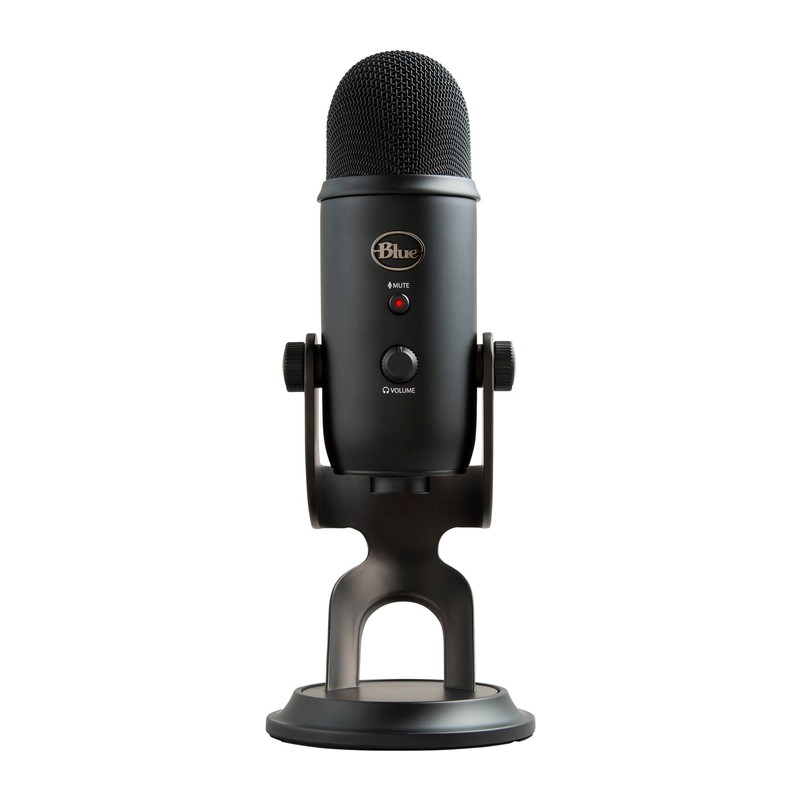
Blue Yeti review: the USB mic that set the streaming standard
The three-capsule USB condenser that became the default 'good mic' for streamers and podcasters: four selectable pickup patterns, onboard gain and mute, and a plug-and-play stand that has kept it on desks for over a decade.
- blue yeti
- blue snowball
- HyperX QuadCast
- Razer Seiren
Updated 2026-07-26. Interest is relative search demand (0–100), not sales figures.
Blue Yeti USB Microphone specs
| Pickup patterns | 4 — cardioid, omni, bidirectional, stereo |
|---|---|
| Capsule | Three-capsule condenser array |
| Controls | Headphone volume, pattern, mute, gain |
| Headphone out | 3.5 mm, zero-latency |
| Connection | Plug-and-play USB (PC and Mac) |
| Mounting | Pivoting desktop stand, threaded for boom arms |
Manufacturer's published specifications.
Verdict: the Yeti is the mic people name first when someone asks what to buy. A chunky three-capsule condenser on its own desktop stand, it covers nearly every use — solo voiceover, a two-person interview, a whole room — through four switchable pickup patterns, and it does it over plain USB with no interface. That versatility, plus a decade of being the safe recommendation, is why it’s still the category’s reference point.
The specs that matter
Per Blue’s official listing:
- Three-capsule condenser array feeding four pickup patterns — cardioid, omnidirectional, bidirectional, and stereo — selected by a dial on the back.
- Onboard controls: headphone volume, pattern selection, instant mute, and microphone gain, all on the mic itself.
- Zero-latency headphone output (3.5mm) for direct monitoring while you record.
- Plug-and-play USB on PC and Mac with an included pivoting desktop stand; threaded for standard mic mounts and boom arms.
What reviewers love
- The all-rounder pickup patterns — reviewers keep coming back to the flexibility: cardioid for streaming, omni or bidirectional for interviews and roundtables from one mic.
- Onboard gain and mute — physical controls beat digging through software, and the front-facing gain knob makes it hard to clip.
- It just works — the recurring theme is that it sounds good out of the box with no interface, drivers, or tweaking.
Worth knowing before you buy
- It’s big and it hears everything — the sensitive condenser picks up desk bumps and room noise, so it rewards a quiet space or a boom arm and a bit of gain discipline.
- Side-address, not end-address — you speak into the side of the grille, not the top; a common first-time setup mistake.
- A full-size desk footprint — the included stand is stable but sizeable next to more compact mics.
Who it’s for
Anyone who wants one mic that can handle streaming today and an interview tomorrow without buying an audio interface — the Yeti remains the versatile, low-risk default, which is exactly how it earned its place.