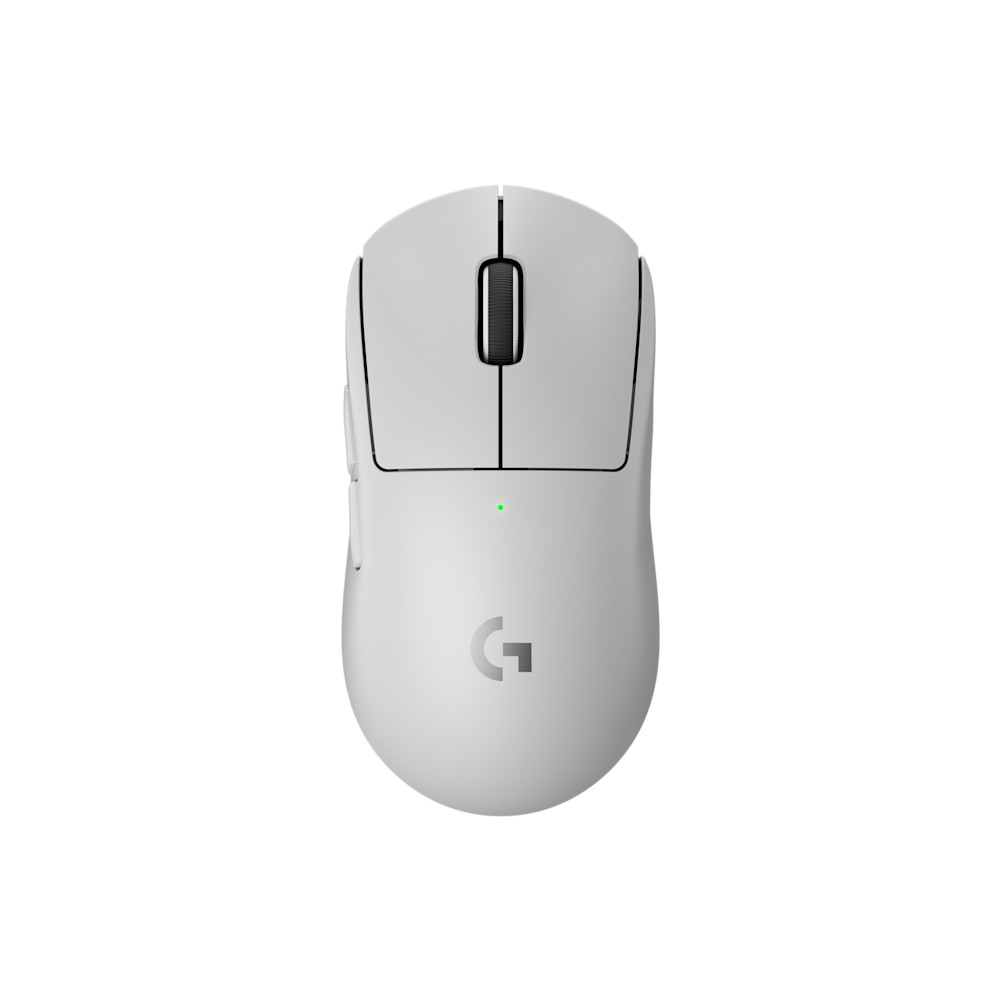
Logitech G PRO X SUPERLIGHT 2 review: the esports featherweight reviewers treat as the flagship benchmark
A 60g symmetrical wireless mouse built for competitive play — the HERO 2 sensor at up to 44,000 DPI, LIGHTFORCE hybrid switches, and up to 8,000 Hz LIGHTSPEED polling. The pick pros and reviewers keep using as the flagship yardstick, if you want a stripped-down performance mouse and don't mind paying for the badge.
- Logitech G Pro X Superlight 2
- Razer Viper V3 Pro
- Razer DeathAdder V3
- Glorious Model O 2
- Pulsar X2
Updated 2026-07-16. Interest is relative search demand (0–100), not sales figures.
Logitech G PRO X SUPERLIGHT 2 wireless gaming mouse specs
| Weight | 60 g |
|---|---|
| Sensor | HERO 2, up to 44,000 DPI, 888+ IPS |
| Polling rate | Up to 8,000 Hz |
| Battery | Up to ~95 h at 1,000 Hz |
| Switches | LIGHTFORCE hybrid optical-mechanical |
| Buttons | 5 programmable |
| Connection | LIGHTSPEED wireless, USB-C, POWERPLAY-compatible |
| Feet | Zero-additive PTFE |
Manufacturer's published specifications.
Verdict: the default flagship recommendation in the competitive-ultralight category — a featherweight, proven shape with the HERO 2 sensor and 8K polling headroom. The homework is whether you need the badge over the (still excellent) original, and how much battery you want to trade for that 8,000 Hz.
The specs that matter (per Logitech’s official listing)
- Sensor: HERO 2 optical, up to 44,000 DPI, tracking at 888+ IPS with zero smoothing, acceleration, or filtering.
- Weight & shape: about 60g, a low-profile symmetrical body (right-handed friendly) — the same silhouette that made the original a staple on pro rosters.
- Switches: LIGHTFORCE hybrid optical-mechanical main switches, tuned for a mechanical feel with optical-actuation speed.
- Buttons: 5 programmable buttons, configurable in Logitech G HUB.
- Connectivity: LIGHTSPEED wireless with up to 8,000 Hz polling; USB-C, and POWERPLAY wireless-charging compatible.
- Battery: USB-C rechargeable, rated up to ~95 hours at 1,000 Hz (higher polling rates draw it down significantly — see below).
- Feet: zero-additive PTFE glides for a smooth, consistent slide.
What reviewers love
- The weight-to-shape balance. Reviewers consistently praise how a proven, comfortable shape now comes in at 60g without feeling hollow or creaky — the build stays reassuringly solid for an ultralight.
- Sensor and tracking. The HERO 2 sensor gets described as flawless in normal use: reviewers report no perceptible smoothing or acceleration and rock-steady tracking.
- LIGHTFORCE switches. Testers generally like the tactile-but-fast click, and the hybrid design is aimed squarely at the double-click reliability worries that dog older mice.
- 8K polling headroom. On capable systems, reviewers measure lower click latency at the higher polling rates — useful headroom for players chasing every millisecond.
Worth knowing before you buy
- 8K polling costs battery. Independent testing shows battery life scaling sharply with polling rate — roughly ~95–100 hours at 1,000 Hz but only around ~20 hours at 8,000 Hz, so the fastest setting is a real trade-off.
- It’s an iterative upgrade. Several reviewers note it’s not dramatically different from the original Superlight; if you already own that mouse, the case to upgrade is a lot weaker than the spec sheet suggests.
- Stripped-down by design. No RGB, no onboard weights, minimal extras — it’s a performance tool, and that’s the point. Buyers wanting flair should look elsewhere.
- Premium price. As the flagship esports pick it sits at the top of the price band; budget-minded players can get most of the shape for less from Logitech’s own cheaper lines or rivals.
Who it’s for
Competitive and aspiring-competitive players who want a proven, tournament-tested shape at minimum weight, with a top-tier sensor and the option of ultra-high polling — and who are fine paying flagship money for it. If you already run the original Superlight, or you want RGB and extras rather than a bare performance tool, the upgrade math is harder to justify.